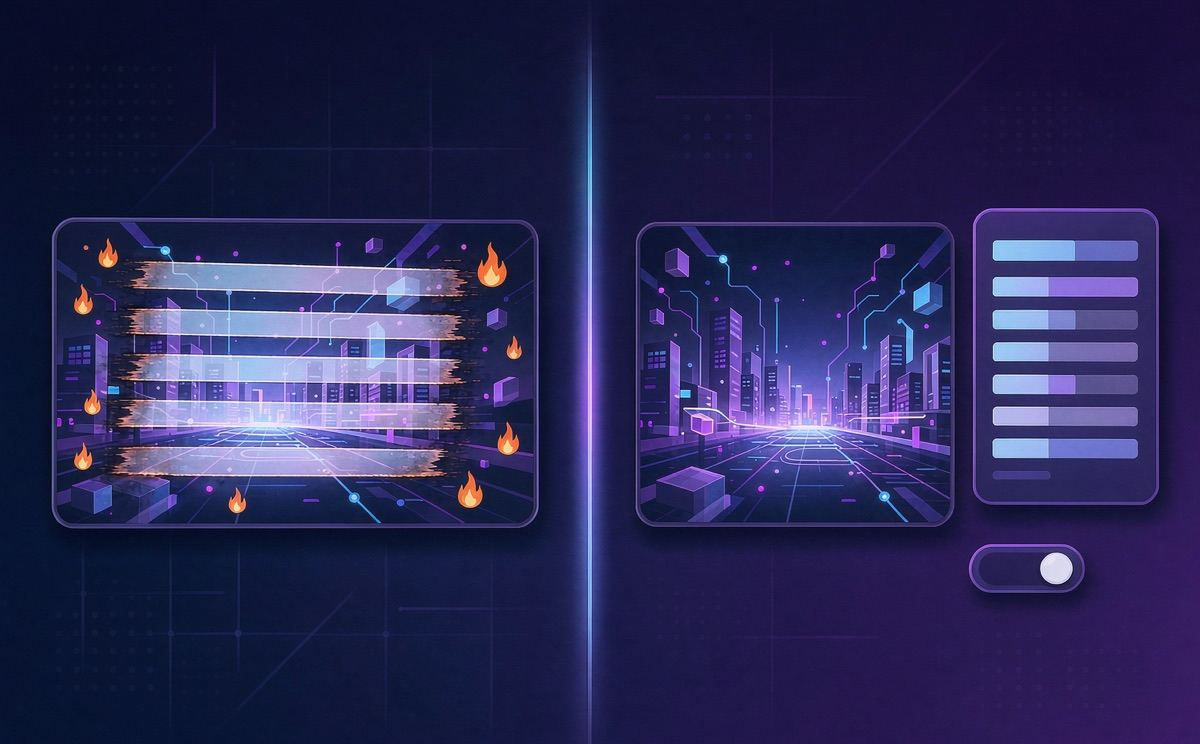
Burned-In or Soft Subtitles? Understand the Three Subtitle Forms First
"Add subtitles" means three different things depending on who says it: paint the text into the picture, mux in a toggleable subtitle track, or hand over a separate .srt file. The price of picking the wrong form usually shows up after publishing.
Three forms, one line each
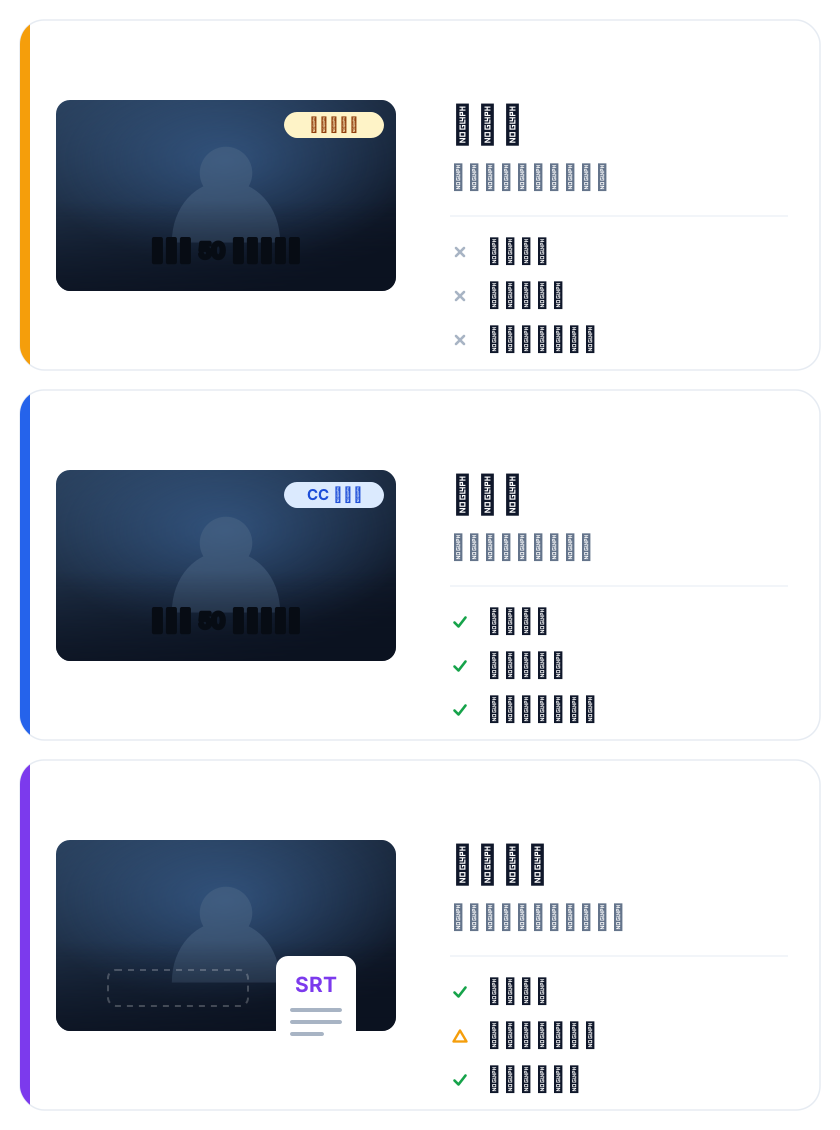
Hard subtitles (burned-in) are rendered into the frame — every pixel becomes part of the picture. They can't be turned off, don't depend on the player, and survive screenshots, re-encoding and forwarding. Soft subtitles (CC / embedded track) are a separate text stream inside the container: switchable and readable by platforms; on MP4 that's usually mov_text, while MKV natively takes SRT and ASS. External subtitles are a separate .srt / .ass file handed over alongside the video and loaded by the player — if the file goes missing, so do the subtitles.
| Can it be turned off | Re-encoding needed | Platform can read text | Fixing one word | |
|---|---|---|---|---|
| Hard | no | yes, video stream re-encoded | no (it's pixels) | re-export the cut |
| Soft | yes | no, remux the track | yes | swap the track |
| External | yes | no | yes, once uploaded | swap the file |
The key difference: can the platform "read" your subtitles
Hard subtitles are pixels. Search and recommendation systems receive pictures, not text — unless the platform runs OCR, which is not something you can rely on.
Soft subtitles are text. The platform can use them for on-site search, auto-translation, chapter generation and accessibility. Every line you upload becomes a retrievable asset.
A common misunderstanding here: no subtitle file doesn't mean the platform can't see the content. YouTube and others auto-generate captions from audio (ASR), so spoken content still gets indexed — but that track belongs to the platform, and you can't fix its errors.
What burning costs
Burning requires re-encoding the video stream, and the consequences chain: one more generation of encoding loss (invisible at high bitrates, cumulative over re-encodes); expensive edits — one typo means re-rendering the whole cut; multilingual versions mean multiple files, five languages = five videos; and viewers who want the subtitles off are out of luck.
It also buys something soft subtitles can't: what-you-see-is-what-you-get, independent of any player. Text survives screenshots, silent playback and re-uploads — near-mandatory for short video.
What soft subtitles cost
Soft subtitles depend on the player and platform. Some platforms never display them, some users never enable them, and plenty of platform transcodes drop the track entirely. In short-video feeds, "not enabled" effectively means "never seen". Styling is weak too — the player decides font, size and position.
The strength of soft subtitles isn't making viewers see the text; it's making the platform read it. Once that's clear, the choice gets easier.
Picking by scenario
| Scenario | Recommended form | Why |
|---|---|---|
| Short-video feeds (TikTok, Reels, Shorts) | hard | muted autoplay, platform transcodes are unpredictable |
| YouTube long video | soft track, plus file upload | indexable, auto-translatable, toggleable |
| Course / training platforms | mostly hard | players rarely expose subtitle toggles |
| Client delivery, festival projects | external or soft + burned preview | clients need to review and revise |
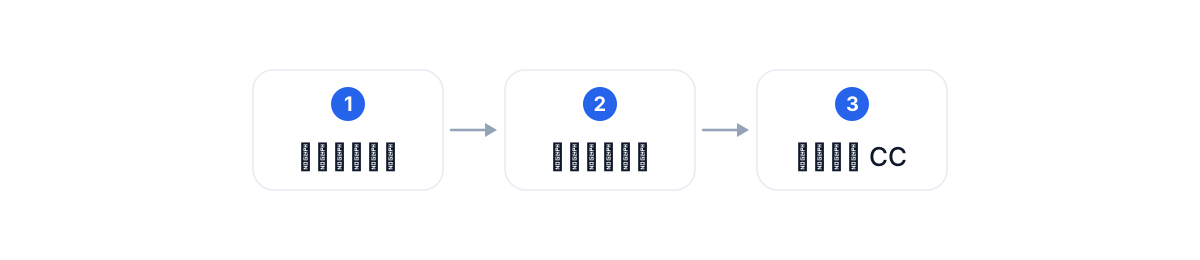
Feeding both shorts and long-form platforms? Derive two outputs from one subtitle file: burn one version into the vertical short, upload the other as CC. The subtitle file is the master and the cut is derived — keep that order. The file from the bilingual SRT generator works as-is, and SmileSub handles recognition, translation and burn-in in one pass.
FAQ
Can burned-in subtitles be removed?
Basically no. They're part of the picture; removing them means guessing at the pixels underneath, with limited results from inpainting tools. Finalize the copy before burning.
Can MP4 hold soft subtitles?
Yes, with a caveat: MP4's soft track is usually mov_text, so convert the SRT before muxing — you can't just drop in a .srt. MKV takes SRT, ASS and VTT natively.
Do hard subtitles hurt recommendations?
No reliable evidence that burning itself is penalized. The accurate framing: burning gives up part of the text signal the platform could read. If search matters, submit the subtitle file too.