Extracting Plain Text from SRT
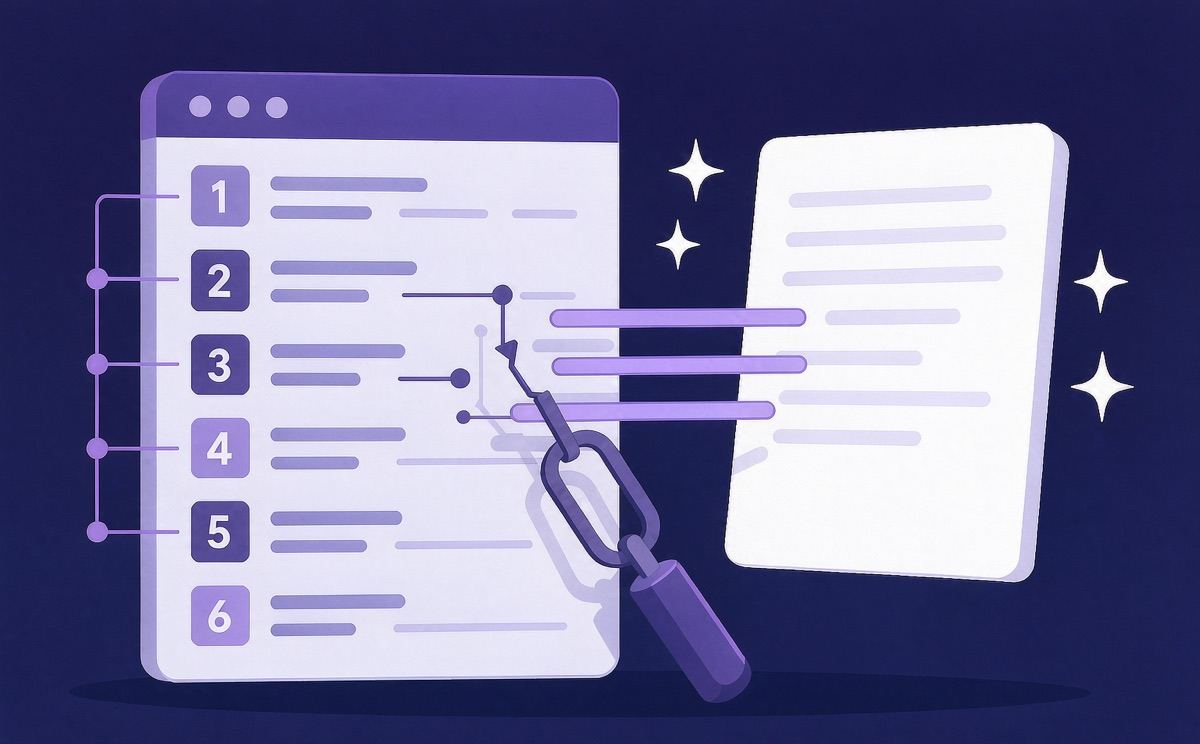
Once the video is cut, the most complete version of the voiceover script usually sits in the SRT. Strip the index numbers and timecodes — the "layout information" — and the remaining plain text is ready for copywriting, search, and quoting. The keys are how to extract and how to clean up afterward.
What else lives in an SRT besides the text
Each SRT cue has three parts: index, timecode, text. Extracting plain text means taking only the third part and discarding the first two.
1
00:00:01,000 --> 00:00:02,500
我们今天聊三个问题
If the file passed through several programs, the text may also carry leftover tags like <i> or <font> — best to clear those during extraction. This site's subtitle cleaner handles such leftovers.
Use one: reconstruct the voiceover script for copywriting
Subtitle text is basically what the video said. Pull it out and you have a ready transcript — rewriting product selling points, outlining short-video script structures, running a content retro with the team, all start immediately.
Far easier than re-transcribing by ear. Especially for multilingual overseas work: one extracted script serves as the shared base for translating into many languages, instead of each language re-listening with drifting wording.
Use two: search and archiving
Plain text is directly indexable by search engines and note apps. Extract subtitles from a batch of videos and you can search "which video covered this feature" by keyword, and aggregate high-frequency topics across videos.
That's more reliable than finding content by title and memory. With timestamps you can still map each line back to its time window — faster than blind searching.
Another under-rated use: feed the extracted text to an AI or notes tool for summarization. Without timecode noise, models grasp the points more easily; you can also reverse-engineer the video structure and decide what to keep or cut. Text first, video later — cheaper and more controllable than throwing raw video at it.
Use three: quoting for translation
Translation vendors quote by word count or minute. The extracted plain text's word count is the most direct basis for pricing — you can say "this script is X words," not "the video is about 10 minutes." Word counts are also stable and comparable: how much changed between versions of the same video shows in one diff. Clear counts make both quotes and schedules more accurate.
To translate the extracted text into other languages, go straight to the SRT translator and upload the original SRT, not the plain text — otherwise the timecodes are lost.
Export format: with or without index numbers
Two common options: no-index plain paragraphs or one-line-per-cue — better for reading, searching, feeding other tools; indexed keeps 1, 2, 3 for one-to-one comparison with the original subtitles and back-tracing.
Default advice: get the clean no-index version first; get the indexed version when you need to trace a line back to its position in the original.
If the team has a fixed template (say, a timestamp before each cue), the indexed version scripts better; for pure reading, no-index is cleaner. Keep both — they complement each other.
For the structure of subtitle files themselves, see the SRT layout explanation in SRT translation to English.
Cleanup steps after extraction
Four things usually follow extraction: dedupe — adjacent cues that split one sentence get merged; strip leftover <i>, <font>-style tags; re-break into semantic paragraphs for reading; proofread the spots where recognition likely dropped or mis-typed characters.
If a passage turns out to be pure filler words or meaningless pauses, mark it out — translation and search both stay cleaner downstream. Only after this is the plain text truly "usable." The step looks fussy, but it saves rounds of rework later. If the source file has overlaps or scrambled indexes, run the subtitle checker first, then extract — cleaner results.
FAQ
Does extraction lose the timecodes?
Yes — that's what "plain text" means: what was said, without when. If you need the timeline, process the SRT itself, not the extracted text.
Will tagged subtitles leave residue after extraction?
Depends on whether the tool strips tags. This site's extraction removes common ones; if the source has especially messy markup, run the subtitle cleaner first, then extract.
Can extracted text be fed straight into translation?
The text itself can be a translation input, but translation tools need the SRT to preserve timecodes. Upload the original SRT for translation, not the extracted text.